Ripper Casino KYC Verification and Cashout Approval Checks
Updated November 2026
Licensed
Available in AU
Fast payouts
18+ Only
Ripper Casino Australia Guide
Account verification
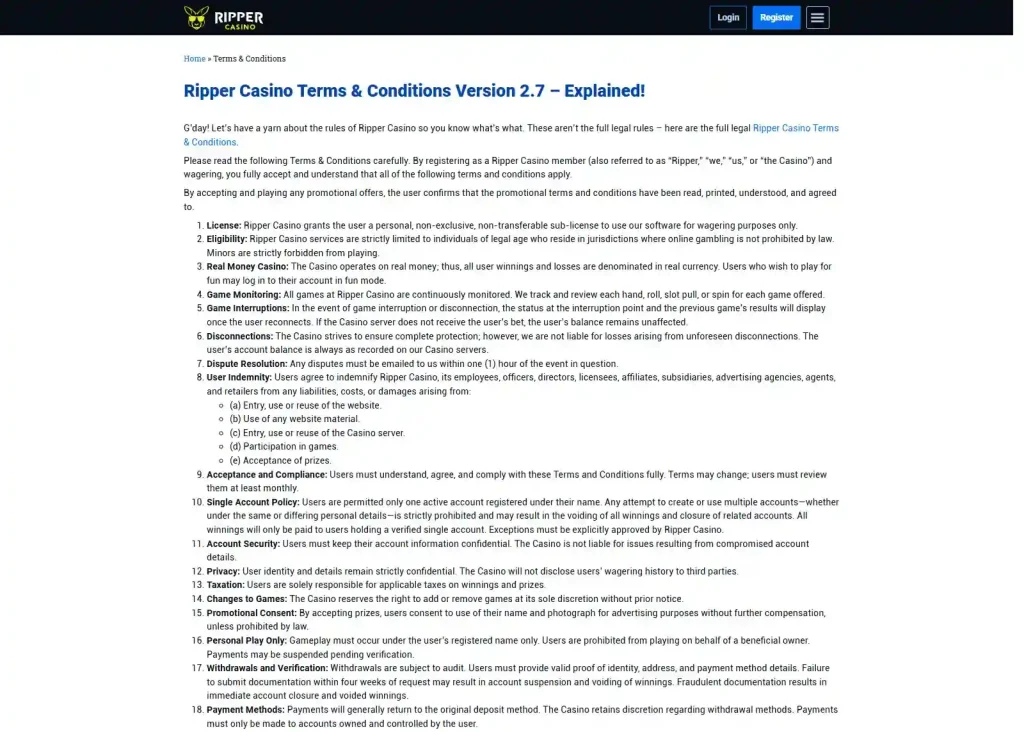
Ripper Casino makes withdrawals subject to verification and audit. Its current terms say a player can be asked for valid proof of identity, proof of address and payment-method details, while source-of-funds or source-of-wealth evidence may also be requested. That means KYC is best treated as part of the cashout process rather than something that matters only at signup.
There is no published standard KYC completion time to rely on. The safer approach is to keep account details consistent, prepare only the evidence actually requested, and avoid sending extra documents based on generic casino checklists. If a withdrawal is already pending, the dedicated withdrawal process explains the surrounding withdrawal rules.
Mandatory KYC Documentation, Identity Proof and Approval Timelines
The current terms state that withdrawals are subject to audit and that players must provide valid proof of identity, address and payment-method details when requested. They also reserve the right to ask for information about the source of funds or source of wealth and supporting evidence for deposits. These are the categories worth preparing for because they come from the casino’s own rules rather than a generic KYC template.
Verification area
What the terms support
Practical preparation
Identity
Valid proof of identity can be requested.
Use the identity details attached to the account and follow the document request shown in the live account flow.
Address
Proof of address can be requested.
Make sure the address on the account is current before submitting evidence.
Payment method
Payment-method details can be part of withdrawal verification.
Use payment instruments that belong to the account holder and keep deposit records available.
Source of funds
The terms allow requests for source-of-funds or source-of-wealth information and supporting evidence.
Respond to the exact request rather than sending unrelated financial documents in advance.
The important limit is equally clear: the published terms do not give a standard turnaround time for KYC. A fixed promise such as “24 hours” or “three business days” would therefore create an expectation the current rules do not support.
These categories answer different questions. Identity evidence connects the account to the person using it, address evidence supports the account details, and payment-method evidence connects the funding route to the account holder. A source-of-funds request is separate again: it concerns the origin of money rather than replacing the identity or address checks. Keeping those purposes distinct makes it easier to understand why one completed check may not satisfy a different request.
The exact item requested can vary, so a third-party checklist should not be treated as the instruction for a specific account. Use the request shown by Ripper and provide the category it actually asks for. Sending unrelated extra material does not create a faster route and can make it harder to tell whether the outstanding requirement has been met.
Cashout connection
Why verification can interrupt a withdrawal
Ripper’s rules tie verification directly to withdrawals. Payments can be suspended while checks are completed, and the terms say winnings are paid only to users holding a verified single account. They also state that payments generally return to the original deposit method and must go to accounts owned and controlled by the user.
This makes consistency more important than speed. A mismatch between the registered name and payment details is specifically listed among account problems that can lead to action by the casino. Using one clear identity across registration, deposits and withdrawals reduces avoidable friction when the cashout reaches review.
The current terms also set a maximum withdrawal of up to A$2,000 per customer per week. That limit is a withdrawal rule, not a KYC processing estimate. Verification and payout scheduling are separate issues, even though both can affect when money leaves the account.
A withdrawal request and a verification check are connected but they are not the same step. The payment request can exist while the account is still being reviewed, and completing one requested document category does not by itself prove that every account check is finished. This is why an estimated payment-method time should not be read as a complete end-to-end cashout time when verification is still open.
A standard KYC completion time is not stated. The useful preparation is therefore procedural rather than time-based: keep the account details accurate, make sure the payment method belongs to the account holder, respond to the categories actually requested, and check the account again for any remaining instruction before assuming the review is complete.
Preparation checklist
What to check before sending verification documents
Match the account
Confirm that the name and address on the account are current.
Use payment details owned and controlled by the same account holder.
Keep deposit and withdrawal records in case the payment trail needs clarification.
Follow the actual request
Provide only the identity, address, payment or funding evidence requested.
Do not rely on a third-party list of documents as though every account receives the same request.
Do not assume a fixed verification completion time.
A generic online-casino checklist often expands KYC into a long catalogue of passports, licences, selfies, bank statements and utility bills. Ripper’s current terms support broader evidence categories, but the exact document requested can depend on the account and the reason for review. The useful rule is therefore to prepare for the category, then follow the specific instruction presented in the account or support channel.
If a request is unclear, confirm what is required through the support route exposed by the site rather than substituting documents from a generic casino guide. That keeps the response tied to the account and avoids adding document types that Ripper has not requested. It also gives you a clearer record of what was asked for and what was supplied.
For withdrawal planning, the practical sequence is simple: verify that the account information is consistent, check whether a payment-method or source-of-funds request is outstanding, then follow the cashier instructions for the withdrawal itself. Verification can remove an outstanding account requirement, but it does not guarantee that a withdrawal will bypass the normal audit, method rules or other applicable terms.
Document requests
A request should not be left unanswered
The current withdrawal clause says failure to submit requested documentation within four weeks can result in account suspension and voiding of winnings. That is different from saying verification itself will take four weeks. The four-week wording is a deadline attached to the player’s response to a document request, not a promised processing period.
If a request arrives, read it closely and respond through the account or support route indicated by the casino. Avoid emailing sensitive documents to an address found on an unrelated website, and do not send more information than the request requires. If the request is unclear, ask support what evidence is needed before submitting anything.
Fraudulent documentation is treated separately and can lead to immediate account closure and voided winnings under the terms. The practical takeaway is straightforward: accurate account details and genuine supporting evidence matter more than trying to complete verification quickly.
Australian context
KYC does not establish Australian regulatory approval
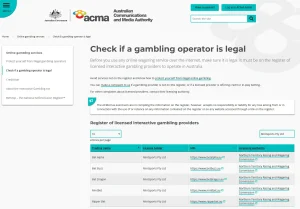
Passing account verification answers an identity and payment-control question. It does not show that Ripper Casino holds an Australian gambling licence or that an account is covered by an Australian gambling consumer-protection scheme. Those are separate regulatory questions.
For readers comparing the provider’s status with Australian rules, use the dedicated Australian regulatory context. Keeping the topics separate avoids a common mistake: treating successful registration or KYC as evidence of local licensing.
The broader Ripper Casino Australia review brings together account access, banking, bonuses, games and the Australian context without turning any one operational feature into a legal conclusion.
Withdrawal readiness
How Ripper verification connects to withdrawals and source-of-funds checks
Ripper’s current terms make the connection direct: withdrawals can be audited, identity, address and payment details can be requested, and source-of-funds evidence may also be required. Keep the account and payment trail consistent, respond to the exact request shown for your account, and do not plan around an assumed KYC completion time. A completed identity check also does not remove separate withdrawal rules such as the weekly payout limit. The practical goal is a clean, consistent account record that can support the withdrawal you are actually trying to make.
Treat a new verification request as an account-specific instruction rather than a signal to resend everything previously supplied. Check which category is outstanding, compare it with the account details and payment route involved, and respond to that request directly. If a source-of-funds check is requested, it does not replace proof of identity, address or payment ownership; it addresses a different question. This distinction matters because a withdrawal can remain under review even after one document category has been accepted, and no fixed completion time is supported by the current terms.

 Available in AU